Specialized mechanical design and manufacturing enterprises
Experienced technical team - after sales
E-mail:
811535444@qq.com

Experienced technical team - after sales
E-mail:
811535444@qq.com
21
2019.21
26
2019.26
26
2019.26
26
2019.26

Chengdu Youli Kuen New Material Co., Ltd. is a family business with a history of 16 years. We focus on the R amp; D, production and sales of new materials, new energy and environmental protection equipment, especially in the field of electric power and steel. We have two domestic and international R amp; D centers and p……
Read More


The technical requirements of Chengdu non-standard equipment processing are usually based on the primary function and working conditions of the shaft
1. Surface roughness of fine parts
Generally, the surface roughness of the shaft diameter cooperating with the transmission parts is ra2.5 ~ 0.63 μ m, and the surface roughness of the supporting shaft diameter cooperating with the bearing is Ra0.63 ~ 0.16 μ M.
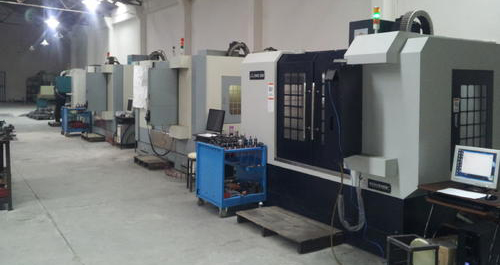
2. Mutual orientation accuracy of fine parts
The orientation accuracy request of non-standard parts processing is mainly determined by the orientation and function of the shaft in the machine. Generally, the coaxial degree of the Journal of the transmission part to the supporting journal should be required, otherwise the transmission accuracy of the transmission part (gear, etc.) will be affected and the noise will occur. The radial runout of the cooperative shaft section to the supporting Journal of the shaft with normal precision is usually 0.01 ~ 0.03mm, and that of the high precision shaft (such as the main shaft) is usually 0.001 ~ 0.005mm.
3. Some shape precision of fine parts
The shape accuracy of shaft non-standard parts mainly refers to the roundness and cylindricity of journal, outer cone, Morse taper hole, etc., which should be restricted in the scope of scale service. For the surface of inner and outer circle with higher accuracy requirements, the allowable deviation shall be marked on the drawing.
4. Machining dimension accuracy of non standard parts
In order to determine the orientation of the bearing journal, NC machining usually requires higher dimensional accuracy (it5 ~ it7). The dimension accuracy of Journal for installing transmission parts is usually low (IT6 ~ it9).



 Recommended

